Showing posts with label advice. Show all posts

Tuesday, October 2, 2012

Winner of the New Orleans 48HFP

So.... Besides this post being super late....

WE WON!!!!!!!!!!!!!!

Ahem.... So in my last post I talked about what I'd been up to, and one of those things was the 48HFP. Now I love 48. I've been competing for four years. I have a great team. We made a great film that we loved. But we never thought, in our wildest dreams, that this would happen.

This program has been brought to you by Migty-O's!

We won 10 of the 17 awards*, including Best Overall. Which means, our cheese ball little sci-fi adventure serial will not only be shown at the New Orleans Film Festival (holy moly! And we're in Louisana Shorts 2 *cough*) but we'll be competing against all the best of's at Flimapalooza in Los Angeles! We have no expectations of winning, but are just excited to be grouped with the best of the best - to say, we were there among the greats. It's so amazing.

I am also personally honored because we won Best Director. I totally teared up when I heard my named called for that. I'm still stunned.

I also learned sooo much from this year's competition. I watched every film this year, finally being able to make it out to all the screenings. And I will say, that there were some really fabulous films. Makes it even more astonishing to us to be ranked with those other wonderful filmmakers.

This is my 4th year doing 48HFP, and every year I learn something about film making and myself. I learn how to do something, and take all the things I did wrong in the past and chuck them out the window so I can make new mistakes.

Which leads me to something I never thought I learned about 48: how to make a winning 48.

1. Don't make a film to win; make the film you want to make.

Long before there were even nominations for awards, my team and I were proud of our 8 minute flick. Why? Because no matter what happened, we loved our film. We were proud of it, and we never once thought about "winning" while we were making it.

So, Friday night I pulled the genre "romance," and cringed. We talked about genres to throw back, and romance didn't make the list. We weren't afraid of romance (we were afraid of drama), but we weren't enamored with it either. Kirk insisted I text the group and ask them if I should throw back the genre. It was unanomous. Throw it back. A romance was not the film we wanted to make. And I'm so glad we did, because our 2nd choice was what I pulled - Adventure Serial. I screamed yes! and high-fived Kirk, and drew the attention of every remaining team (probably wondering what we were so happy about).

We were so happy because we were going to make the film we wanted to make. And everyone on our team felt the same way. All the pieces floated together. Everyone was stoked. It was magical. And not once did we ever think about awards or winning. It didn't matter, and we didn't care.

We didn't make any choices for our film thinking, we might win this award if we did this. Winning never matter, though, we all admitted it would be really nice.

Yes, that is random sheets of black fabric being hung over cardboard with some Xmas lights.

2. Don't let your equipment stop you.

Okay, I'll be the first to admit we have some decent equipment, and some crappy equipment. We're real middle of the road when it comes to that. SO MANY teams had fabulous equipment. I'm talking RED EPICS (cameras that cost more than my yearly salary). They had cranes and real equipment! They had people that weren't ghetto rigging the tripod so the camera didn't fall off! (*cough*cough*)

We knew this going in. We knew this throughout from various tweets. While I moaned and lamented that I wanted a RED, I knew I wasn't going to have one. I also didn't let it intimidate me. I'd seen so many people with expensive equipment turn out crap in film school because they didn't know how to use it. Just because someone uses really good equipment doesn't mean their film is automatically good. If that were true, there would never be any breakout indie success. The Blair Witch Project and Paranormal Activity would not have been the successes they are. Videos shot on cell phones would never go viral.

Equipment only enhances a project. It doesn't make or break one.

And some how, with our mediocre equipment, we nailed some technical awards. (Really? How'd we end up with Sound Design?) So yeah, bigger doesn't mean better. Don't let something as silly as equipment keep you from making the film you want to make.

Editor, DP, and Husband serving writers surprise finger sandwiches in his snazzy apron just to get a laugh.

3. Have fun.

Ok, this sounds ridiculious, but I've consistantly done one thing every year - have fun. I love 48hfp. I have so much fun doing it. I partcipate with predominately non-film people. We giggle, push ourselves, and make something just because we want to. We do it for the love, and for the fun.

Sunday afternoon, while people hang out on the couch waiting to actually see what we've filmed, I get comments like: "I can't wait for next year." "So, are gonna continue this as a web series? Cuz I'd be down replaying my role."

I get so many people coming back to be a part of the team year after year because, bottom line is, we have fun. In the end, it doesn't matter if we win or lose. If we make a good film or not. It's the act of doing it, and doing it together, and having a good time that makes this all worth while. I don't understand the people at the kick off who stand there going "every year I say this is the last, but I somehow find myself back here." Because every year I say, "Is it 48 yet?"


When I told my friend that we'd won, she said, "Guess that means your the team to beat next year." I laughed. I'd never gone into 48hfp trying to beat the winning team. (I'll admit, I do have some imaginary grudges of people I'd like to beat just because.) Instead, I go in in thinking the only people I have to do better than is us. Every year we want to grow and improve and have fun doing it. Would I like to win again? Hell yes. Do I expect to or make that a priority to us? Absolutely not.

Next year, I expect everyone to be gunning for us, and I say great. If I can inspire someone to make a great 48hfp, then I feel accomplished. And if we can do better than this year, then even better! Maybe we'll win again (a first in our city). But honestly, I don't care. As long as I get to keep doing what I've been doing.

And I just hope, that next year, we pull Western/Musical.

Tuesday, July 3, 2012

Splash into Summer: Part of my World - Creature Creation


Splash into Summer
Today for Splash into Summer, I'm going to talk about my mermaids. How I came to creating them and what they sorta look like.

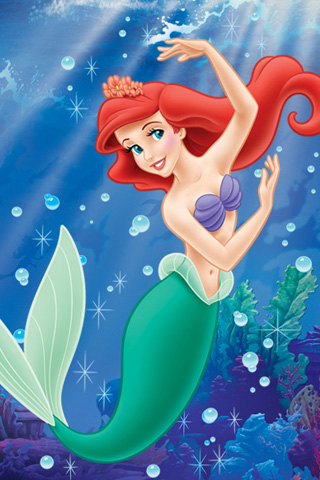
When I decided I wanted to write about mermaids, I knew I didn't want my mermaids to look like this:

 
I'm not even sure what kind of pose Ariel is doing here.

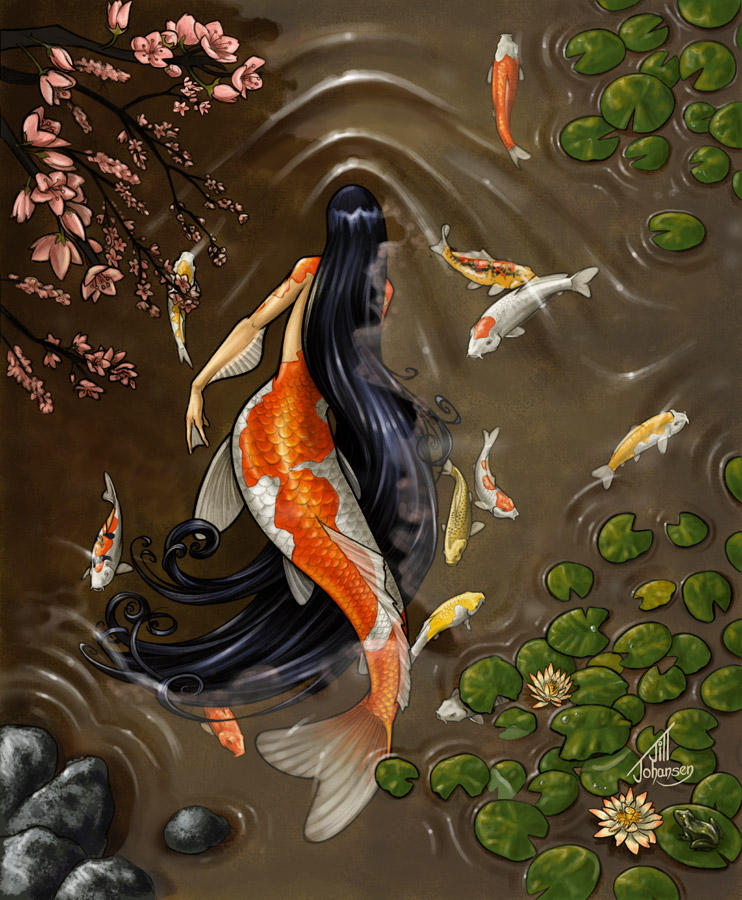
 Instead I wanted incorporate my love of saltwater fish into my creatures. I want my mermaids to be based on actual fish.

Ok, so maybe she's based on a koi not a saltwater fish, but you get the idea.
Image by Bamfette

Mermaids aren't an unusual creatures. Their imagery is all over the place, especially around any location that has water. Their image is as iconic as unicorns and fairies. Mermaids are typically visualized as top half very human and bottom generically fishy. Going outside of the box is a glitter tail and gils. Using actual aquatic inspiration for mermaid designs seems rare. I have found some, and they're based on dolphins. (I am not, nor have I ever, been a dolphin person.)

My family has been aquarium hobbyists all my life. In fact, they bread freshwater angelfish on a fairly large scale for a chuck of my childhood. Then when I moved out, I didn't last a year before I bought a betta fish and put it in a giant martini glass.

When I got my first apartment, I set up my first saltwater tank. It was big and I kept lion fish, though I desperately wanted a Harlequin Shrimp.

 These are totally my favorite aquatic thing ever! The EAT starfish! How cool is that?
Plus they look like aliens.

Anyway, times pass, and I get this inspiration for writing a mermaid book. Immeadately my years of fishkeeping come to me. I know that my mermaids will take on characteristics of specific fish. Razor fins! Venomous spines! Yes! I start browsing images online, looking for mermaids that resemble mine...

I don't find much.

I start reading more mermaid books to examine how other authors building their creatures and worlds. Still nothing quite like I imagined. 

I often feel sad seeing this lack use natural inspiration. Aquatic creatures can be down right cool and weird. They have some of the craziest color combinations on the planet. I knew immeadately, that I would attach a fish inspiration to all of my merfolk. That I would drawn from all my knowledge about cool aquatic creatures. I'll incorporate razor fins and juvenile color patterns.

 The Emporer Angel juvinile. My MMC still has this pattern and is teased by his sister for it.

Creature creation is a very difficult part of writing. Mermaids are both over explored and underexplored. The word itself brings to mind a very specific image, yet, it's not the image I want. I'm very excited to mold that image into something new and unqiue. There are so many cool things in nature to take inspiration from. When it comes to mermaids, I want to see this happen.

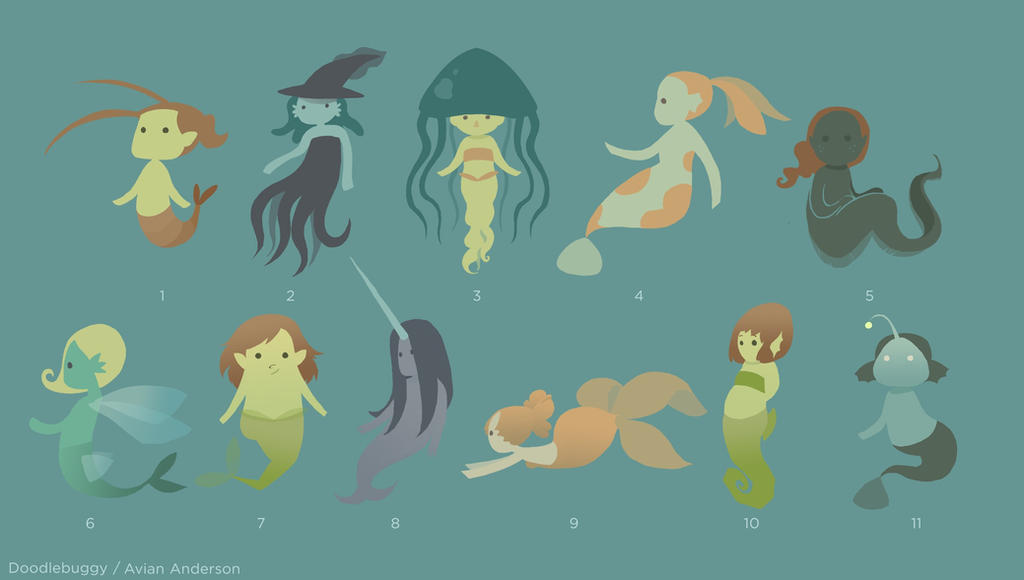
The Mermaid combinations are endless!
Picture by Doodlebuggy
So, take time to create your creatures. Draw from inspirations you know and love. Google cool pictures and keep a folder. And sometimes, the thing sitting in front of your nose is the best place to start.

Monday, July 2, 2012

Just Keep Swimming


Splash into Summer


I promise, by the end of this blog, I'll have a Splash Into Summer tie-in.

It's the beginning of July, and the end of Camp Nanowrimo. In case you were wondering, I did not have a miraculous finish. Actually, I'm not even sure of my final word count, but I estimate it's around 30k. I am still okay with this.

This weekend, I've been sitting down with my work, backwards engineering an outline. This is exceptionally rough for me. This draft isn't half bad, but, I'm having a hard time looking at it as a whole. I kept saying, "This writing thing is hard!"

I was feeling particularly down, so I asked Twitter what I should do when it was tough to keep writing. I got the best answer ever.

@MegTao just. keep. writing.

It was the perfect encouragement. Something so simple, how could I have forgotten it? (I'm totally thinking of printing these words out and gluing them to the wall behind my desk. Oh, and check out the awesome MegTao's blog too.)

Then I read this in one of my camp buddies blogs:

"Things Camp Nano Has Taught Me:
...
5.) I will never quit writing."

There's something so profound in that statement that I nearly fell out of my chair. 

I will keep writing, and I will never quit.

This totally reminded me of...

Which it totally fishy, and fits right into the Splash into Summer theme! Plus, I'm gonna attempt to post a new post every day for the rest of the week in celebration of Splash into Summer! Booyah!

Monday, May 14, 2012

RIP: Kailyn

So, I'm 1 chapter deep into the new revision of Tails, and I'm already super excited about something. The death of my former female protagonist: Kailyn.

Kailyn, Kailyn, Kailyn, let me count the ways I detest you.

From page 1 of my first draft of Tails (though, it was more like page 5 because Kailyn wasn't in the first page) I detested my romantic interest and female protagonist: Kailyn. She was vapid, whiney, meek, and more a plot device than person. There were things I wanted her to be: smart, resourceful, responsible. Then there was her - a waste of space.

In my numerous drunken rambles about my novel, I would often drone on about how I was going to fix Kailyn. But, really, couldn't figure out how. 'Can you cut her?' No, she's my Male protag's motivation. How can I get rid of her? 'Can you make her less annoying?' If only. I thought, maybe I could minimize her. I'll make her a secondary character, instead of a primary.

I knew the best thing for my novel was to slice off the first 3 chapters and start the book where Kailyn finds a nearly dead Damarion on the beach. One problem - it might lead the focus of the book to be Kailyn instead of Damarion, and I couldn't stand that. So I fussed over the first 3 useless chapters for two months and shelved the WIP.

So, as I sat my my computer throwing bits of 1st draft around like confetti, I started thinking. I have to start the story at that previously mentioned point. Which means I have to deal with my issues with my FMC. But first, a little procrastination. I'm do so much changing (like, solidifing the setting), I thought some characters deserved name changes. And you know what? I never really liked Kailyn for a name anyway.

Five minutes of name research and a list of 10 potential names, and popular vote had a new name for my Female protagonist - Cora. Ah, it brings up thoughts of femme fatales and Lana Turner.
A young Lana Turner would totally make a great Steampunk Princess.

So I started writing, and Cora was doing things. She was smart and quick thinking and a touch rebellious... Before I knew it, I had a new chapter 1 that I was excited about. Then I started thinking about it. Why was it so much easier to write this new chapter 1?

Because Cora is not Kailyn. Cora is everything I wanted Kailyn to be.

Then it came to me - I just cut Kailyn out of the book. But didn't delete the spot, I delted the character, and replaced her with someone better.

So, there's a few lessons I learned from this. 1.) Everything is in a name, and 2.) You can delete a character without deleting a character's role. When I started writing about Cora, I didn't think of her as Kailyn with a new name. Even a new image came to my mind as I was writing. Everything about the character just clicked in my head. Immeadately, I started referring to Kailyn as Cora. The act of changing her name allowed me to change the character because I was no longer thinking of that character. I was thinking of someone new.

And I solved one of my biggest issues with the manuscript by deleting that character I hated withouth deleting the role I assigned her.

So I think a really good trick when you're stuck with a flat character is to change up a name. It worked perfectly for me!

Monday, April 16, 2012

Writing by the Seat of Your Pants with...Screenplays???


Screenplays can be more structured than novels, short stories, prose, etc... And all screenwriting advice talks about this epic mapping of plot and beats - that you need a wall of notecards ever putting pen to paper, or hands to keyboard. Lot's of novelists give this advice as well. But, lot's of other novelists encourage just writing and letting the novel unfurl with minimal pre-planning. As Chris Baty calls it: pantsing.

But I never see this advice offered to screenwriters. Why is that? Many writers are already scared off by the formatting of screenwriting, but then let's add that you need an entire month or more of pre-planning? Those looser, non-outliners run for the hills...

Well I'm here to dispel this. Yes, you can completely write a successful screenplay without all those index cards and planning.

I am a panster screenwriting.

My "baby" screenplay was born of a challenge. Write a screenplay about a homicidal scrapbooking club, oh and the main character has to be gay (because the commissioner had certain parts already). Oh, and it has to include a shoe made of body parts (why?). Oh! And there has to be room for a sequel. Now go!

....

Script Frenzy rolled around, and I just started typing. I had no idea how any of this was going to work or who the main character was. But as I pushed forward, I started thinking and started letting the characters develop, and suddenly, I really had something. Something good. Something born without an outline.

I couldn't stretch out the ending anymore, and ended up making up the last 10 pages of bonus features to meet Script Frenzy's 100 pages. After revisions (there are about 2), the final script is 90 pages. I don't plan on selling the script, because, well, my production team wants to make it. But I have shown it to people in the "biz." One said that it wasn't his cup of tea, but that it was really well written and solid. The producer said that it wasn't something he could produce at this time, but has since called me about a script doctoring job. I showed it to actors and a few other writers, all of whom loved it.

No one said anything about pacing, or poor plotting, or weak structure. No one could tell that I didn't outline to the smallest detail, or that I made the whole thing up on the spot. No one thought for the briefest of moments that I wrote the whole thing without planning.

Now I'm not saying that I don't need revisions, but even traditionally outline scripts need revisions.

I have not planned out a screenplay since Scrapbooking three years ago. Even my current work, which is an adaptation, has no pre-planning and has gone from a short to a feature because I just sat down and started writing. And I plan on keeping it this way as long as I write.

Monday, February 20, 2012

Killing Darlings


Sometimes, I think being stuck at my day job, unable to write, but thinking about writing, might be the best thing for revision. It has lead me to a solution I had been struggling with, and I believe I have come to the point where I slay my first darling. Her name is Celeste.
"Kill your Darlings" is a writing term (though, I heard if first during a screenwriting class) that describes eliminating or cutting something from a work that the writer is close to for the improvement of the work. There's a debate by who actually coined the term, but a couple of famous people have been quoted about it.
I generally don't have a problem with this removal of an element that I'm close to. I think it's the filmmaker in me (where I'm on set and there's not more time or budget left and it's only the essentials we film). So, when looking at my draft after the first read through, I knew I needed to get rid of my beloved Celeste. I just couldn't figure out how.
I never thought that I had a problem killing my darlings. I always found it easy to drop various elements of my story, even if I was emotionally attached to them. That is, if there was a reason for it. Yet, Celeste, well, she snagged me.
Celeste was one of the characters I wrote the story for. She's the herione (though is she really?) from the Grimm Tale "Sweetheart Roland." That tale has resounded with me since the Third Grade because I always thought that the herione was the stupidest girl on the planet. One of subplots I wanted to include in my Flamingo Princess was a reworking of the end of "Sweetheart Roland." One in which the herione is not totally screwed over and calls out Roland on in his infidelity. So I wrote it; it was a cruitial plot point of the novel.
After my first read through, I realized that Celeste fell to the wayside for a good two thirds of the book, only appearing in the beginning and for her big scene. Her character was a bit boring and whiney, which made her climax seem unnatural. Many of her earlier scenes felt forced - I was pushing her there so she could have her big scene. I mean, really, did she have to go to the Cinderella ball? No! I just needed some reason to keep her around... But something, something crutial happens during her big scene, making cutting her completely quite hard. If I deleted her big scene, well, then the charcters wouldn't reach the end.
If that's the case, then is this a darling I really should kill? The answer: yes.
As I work over my beginning, filling in the holes, I kept trying to figure out how to incorporate Celeste more. If I made the character more prevalent, then I don't have to cut her! Yeah, right.
Then I realized how to solve my problem. With a few tweaks, Celeste's big scene could become another character's big scene - someone who was left unresloved in the book anyway. Someone who kept stealing the scene from Celeste, filling her void anyway. There could be only one. Celeste then vanishes from the pages of my book like a wisp of smoke and none would be the wiser.
And I feel - relieved. I think Celeste was weighing me down. She didn't fit into this story, and someday, I'll revisit her and give her a story of her own. Plus, it solves another plot problem I'd been having.
So why did it take me so long to kill her? I think it was because a part of me didn't want to lose her. Her subplot is something I've wanted to explore since I was in third grade. She was a major inspiration for writing the book. I think a part of me didn't want to figure out how to shift things and eliminate her because if she was so important to me, she had to be that important to the story. Instead of trying to figure out how to work her back in, I should have been trying to figure out how to work her out completely.
We need to trust our guts. If our instinct is whispering "kill that darling" we need to listen. That's not always so easy because often we can rationalize to ourself why we shouldn't.
I think to make up for it, I'll leave Celeste in my special thanks when I get the book published.

Monday, February 6, 2012

Back to Basics - an Ephinony


I have been struggling with getting my plot in order. I have it sort of mapped out, but, as much as I love structure, outlining is something I'm terrible at.

I understand where beats go, and what's suppose to happen when. I really do, but when trying to apply that to my work, it's like herding cats. Difficult and full of little claws.

A book about plot passed by me at work, so I stopped to read the first chapter. I didn't think I was going to learn anything new from reading the first few pages of this book, but I'm always willing to learn something new so I gave it a shot.

Or maybe just get inspiration.

As I was reading the book, I realized that I had forgotten the basics. Years and years of study of the craft and I forget my foundations because I'm so worried about alliteration. Step one of writing a book: Who's your main character and what's their motivation. How could I have forgotten that?

Halfway through writing my first draft I realized that my original MC (The Flamingo Princess - a spunky girl who'd been a flamingo for quite some time, and had become comfortable in her skin) wasn't actually the MC. It was West, originally a side character who acted as the catalyst for change in my flamingo's life. He undergoes the most character change throughout the piece, and I knew then, that this was actually his story. So, when I went to rewrite, I knew I was going to drop some scenes to focus more on him.

But when looking at my plot, I kept feeling overwhelmed and dazed. I didn't know what scenes were missing, and which ones to cut. Who to cut out and who to leave. How to change this to West's story. Because I never thought of it in terms of my MC's motivation.

West wants to go home. Why can't West go home? Because his father kicked him out, and he has to return with a knight's reputation. So, if West wants to get home, now I can look at every conflict as "How is this preventing West from getting home?"

Bingo. I feel like I found the missing link.

As much as we write and rewrite, it's important to always remember the basics. This is perhaps the easiest thing to forget.

So, early in the revision process (before going back and outlining) we need to state: who is this story about and what does he/she want? Then we can look at every scene and say "How is this scene helping/hindering that goal?"

Monday, January 16, 2012

The First Read Through


So besides "The Wait," the only other piece of revision advice I've been given is to read my draft through from start to beginning without revising anything. Just a straight read through.

This is harder than it sounds.

If you're like me, you're itching to start throwing yourself into revision. To take out this scene and that scene and rewrite this scene...

Let me step back just for a moment. This particular manuscript I wrote entirely without an outline. Up until now, I'd only written lengthy pieces with at least a basic outline so I never got stuck and always knew where it was going. But November '11 was fast approaching and I had this concept and no time to develop it because I was planning my wedding.

So I barreled straight into November armed with my idea and just started writing. For me, this has worked better than any outline I could have come up with. Thus, when I started writing, I had no idea where it was going to end, or looking back, who the main character was.

This could be why the "Read Through" was particularly helpful to me as a first step. Even though it hadn't been more than a few weeks, I'd completely forgotten whole chunks of my book. Scenes, characters, great lines, major plot points. I have no memory of even writing them. Some of them will be useful, some I'll probably lose.

Still, for the first time, I was able to look at the draft as a whole. The Read Through allowed to figure out my next step to finishing this manuscript.

Unfortunately, it's not rewriting - yet. It's outlining.

Now that I know where I want the story to go, and the basics of how it gets there, I know that I need to change some events that don't work any more. Like the whole first 30 pages, or the role of some characters. Or a bit of foreshadowing that could be in the very first scene.

But I will admit, that during my read through, I didn't just read. I went ahead and x-ed out passages I knew couldn't be saved, or at least didn't need to be there. I highlighted lines that made me giggle, or that I had forgotten but were particularly good. I made notes about how to revamped scenes or add some detail that would become relevant later, even redesign a character or subplot - but I only made notes in the margins or on the back to the page. I didn't write anything new.

So I did do the whole read through, and I think, for the first time, this could be the first big step towards actually getting through the revision process. I also realized that this won't be my only read through.

Read throughs are an important tool for revision because it let's me look at the big picture. I've never been able to do a read through before, which could be because of a combination of factors, but, it could be that the story wasn't interesting enough to keep my interest. Maybe it's a good thing I've shelved my other projects because if I found them boring, then I'm sure others will. It could have been the first sign that they weren't drafts that needed to be revised.

Or it could be my other theory - that I'm terrible at beginnings.

But, if I could go back and change something about doing the first read through, it would be to take notes about what happened in each chapter. This would make the next step I need, outlining, so much easier...